A voice agent that checks inventory, books appointments and logs the customer.
I built a conversational voice agent for a car dealership. It takes the call, looks up available vehicles from a live sheet, schedules or cancels appointments through Google Calendar and saves the customer's details to a CRM record, all through n8n workflows the voice layer can call.
From spoken request to a completed action.
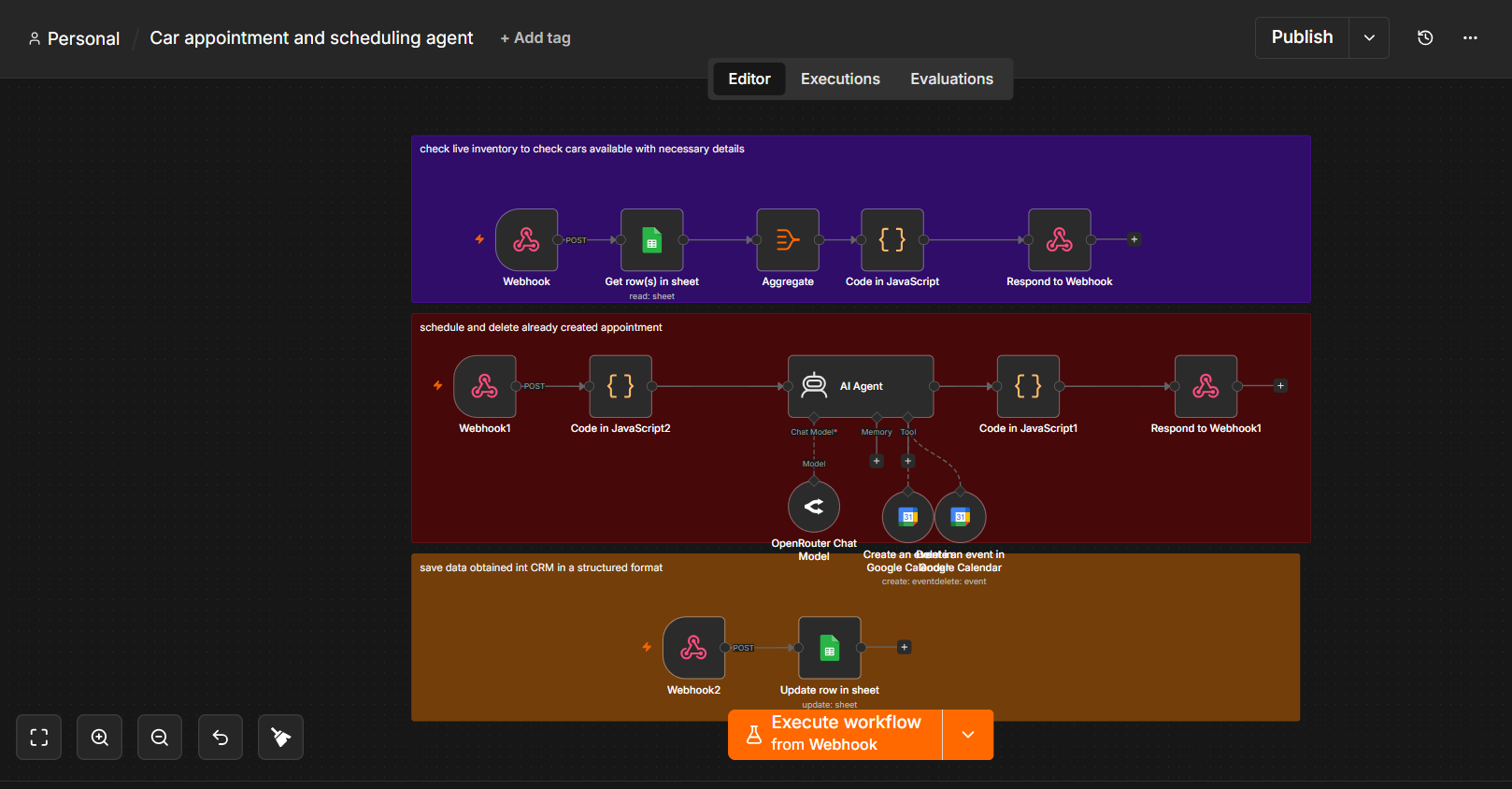
The backend is split into three single-purpose lanes, so looking up a car, scheduling a visit and saving the customer never get tangled together.
Designing a conversation that ends in a real action.
A voice agent is only useful if what the caller says turns into something the business can use. This build connects the spoken conversation to three concrete outcomes: an inventory answer, a calendar event and a CRM record.
Give the caller a natural entry point.
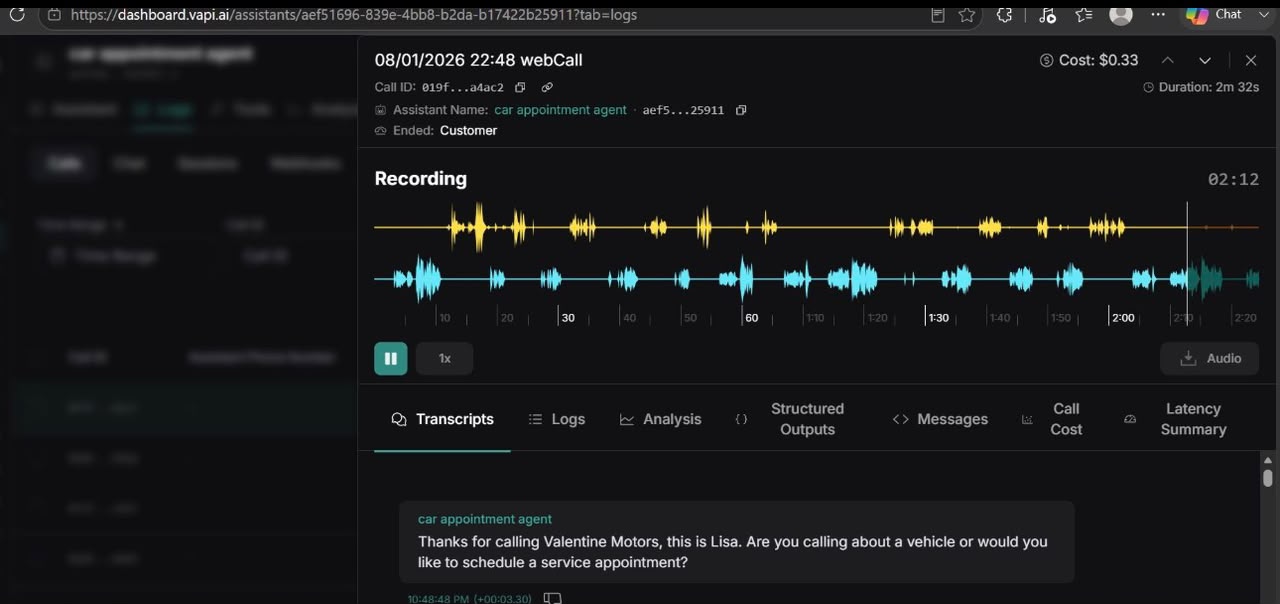
The Vapi assistant answers as a dealership receptionist and opens by asking whether the caller is interested in a vehicle or a service appointment. That first question steers the conversation toward the right workflow from the start.
One webhook, one job.
The n8n workflow is organized into three labelled lanes: check live inventory, schedule or delete appointments, and save customer data to the CRM. Each starts from its own webhook, which keeps every endpoint small and easy to test.
Answer from live data, not a script.
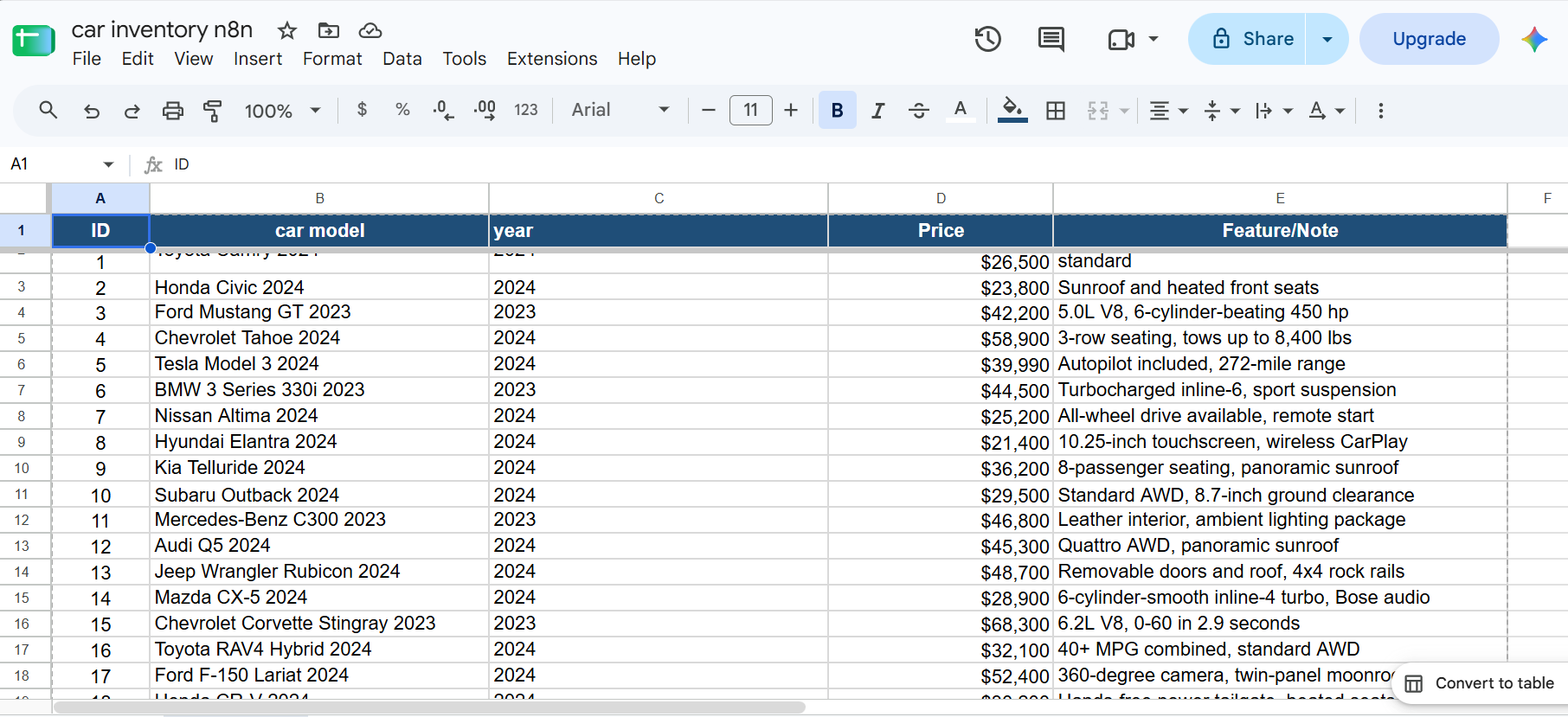
The inventory lane receives the request, reads rows from the Google Sheet, aggregates them, runs a JavaScript step to prepare the result and responds to the webhook. The agent can then speak the price, year and features of the vehicles on the sheet.
Let an AI agent handle the calendar.
The scheduling lane passes the request through a JavaScript step into an AI agent powered by an OpenRouter chat model. The agent has Google Calendar tools to create and delete events, so booking and cancelling run through one path.
Turn the conversation into a record.
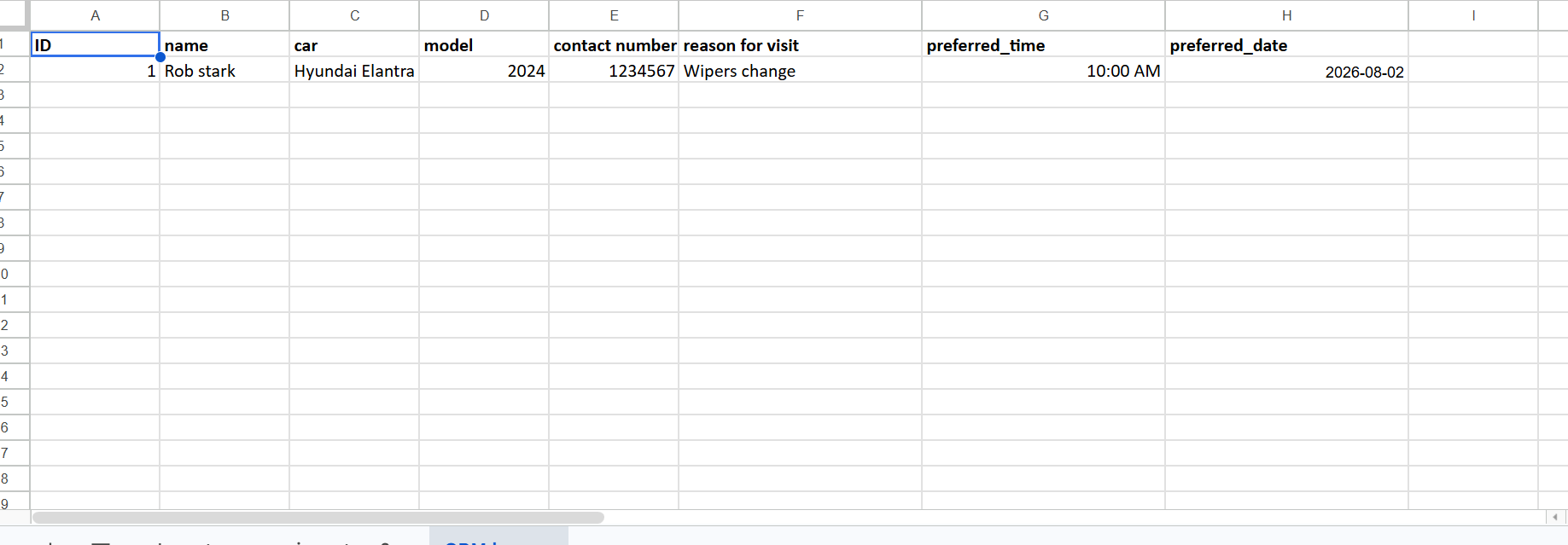
A third webhook updates a CRM row in Google Sheets with the customer's name, vehicle, model, contact number, reason for visit and preferred date and time. That gives the team structured data they can act on.
Keep the data simple and inspectable.
Inventory and CRM live in plain sheets with clear column names. That makes the system easy to review, edit and demonstrate, and keeps the workflow logic focused on the conversation instead of a heavy database.
Trace every test call end to end.
Vapi's call log provides the recording, transcript, logs, cost and latency for each call. The sample call in the screenshots lasted 2 minutes 32 seconds and cost $0.33, which made it easy to check behavior and running cost while iterating.
Voice raises the bar for structure.
Spoken conversations are less forgiving than forms: responses must be short, data must come back in a shape the agent can speak, and every tool needs a clear purpose. Splitting the backend into focused webhooks made the whole system easier to reason about.
Read the full build breakdown
System responsibilities
- Voice: a Vapi assistant answering as a dealership receptionist and driving the live conversation.
- Inventory lookup: a webhook reads the vehicle sheet, aggregates the rows, prepares the result in JavaScript and responds to the caller's request.
- Scheduling: a webhook feeds an AI agent with an OpenRouter chat model and Google Calendar tools to create or delete appointments.
- CRM: a webhook updates a row in Google Sheets with the structured customer details.
- Response: each lane ends by responding to its webhook so the voice agent gets a clear result back.
What the screenshots show
The n8n canvas shows the three labelled lanes, the Vapi log shows a recorded test call with cost and duration, and the two sheets show the inventory the agent reads from and the CRM record it writes to. Together they cover the voice layer, the backend logic and the data.
Scope
This build was tested with a web call, a sample inventory sheet and sample CRM data. It demonstrates the architecture and the conversation-to-action pattern. A production rollout would add a real inventory source, phone-number routing and validation on the CRM fields.