Applicant intake, AI processing and recruitment communication — connected in one workflow.
I designed and built an automated recruitment pipeline that takes an application from secure intake through normalization, validation, duplicate handling, AI-assisted processing, qualification logic, record updates and candidate communication.
Application lifecycle
The workflow was designed as a controlled data path rather than a simple form-to-email automation.
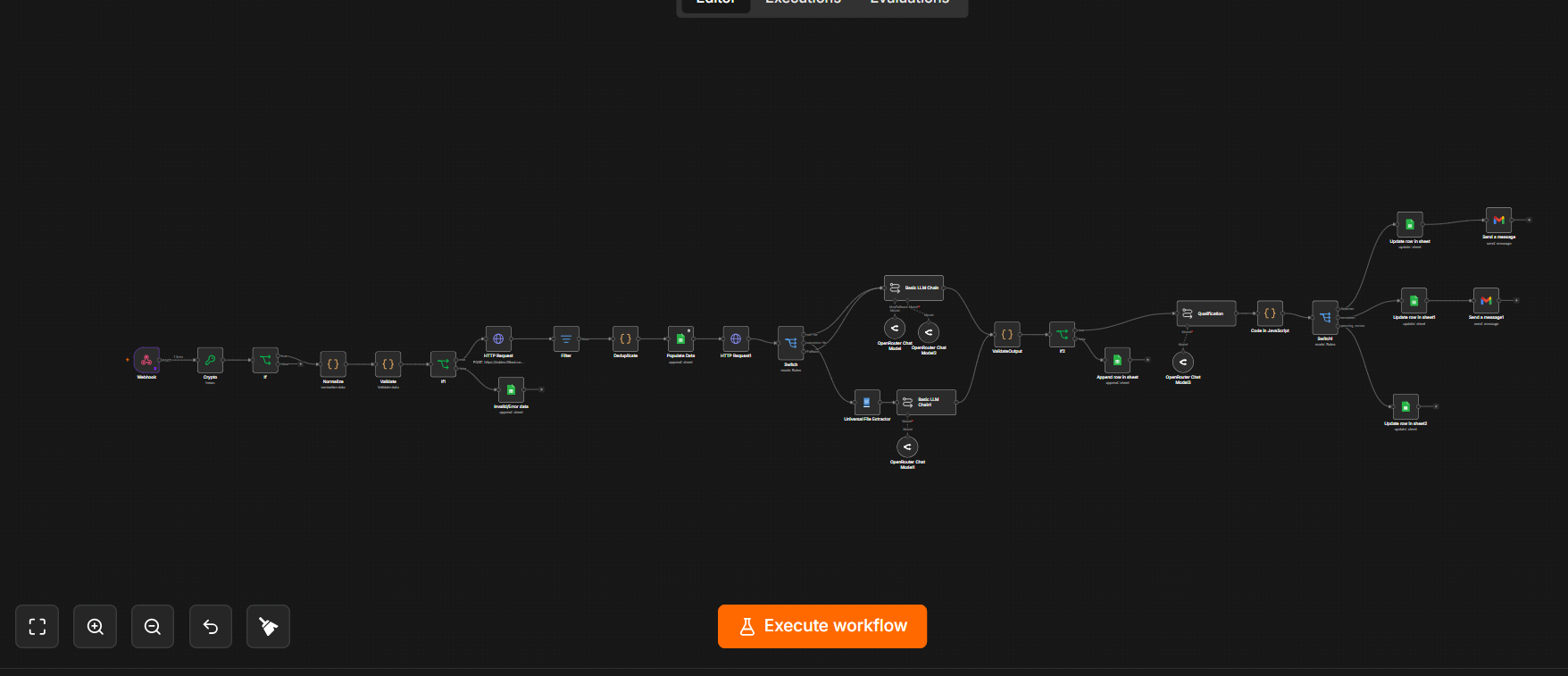
From raw submission to a structured recruitment action.
The strength of this system is in the control points around the data: the workflow checks what enters, decides what should happen next, and keeps the downstream records and communication synchronized.
Start with a controlled entry point.
The application enters through a webhook and passes through a security check before the rest of the workflow is allowed to run. This keeps the intake layer separate from downstream processing.
Turn inconsistent form data into predictable data.
A dedicated normalization step standardizes the incoming fields, followed by validation logic that checks whether the application contains the information required for processing.
Prevent the same applicant from being processed twice.
One of the important design problems was handling situations where previously processed data could appear again. The workflow checks for an existing applicant before deciding whether to update an existing record or create a new one.
Use AI after the data has been made trustworthy.
The AI stage is downstream of the intake controls. Structured applicant data and resume information can then be processed for extraction and qualification logic instead of asking a model to interpret an uncontrolled raw payload.
Convert processed information into a clear next step.
After processing, the workflow evaluates the resulting structure and branches into the appropriate downstream path. This creates a consistent operational handoff instead of leaving every application as a manual decision point.
Close the loop automatically.
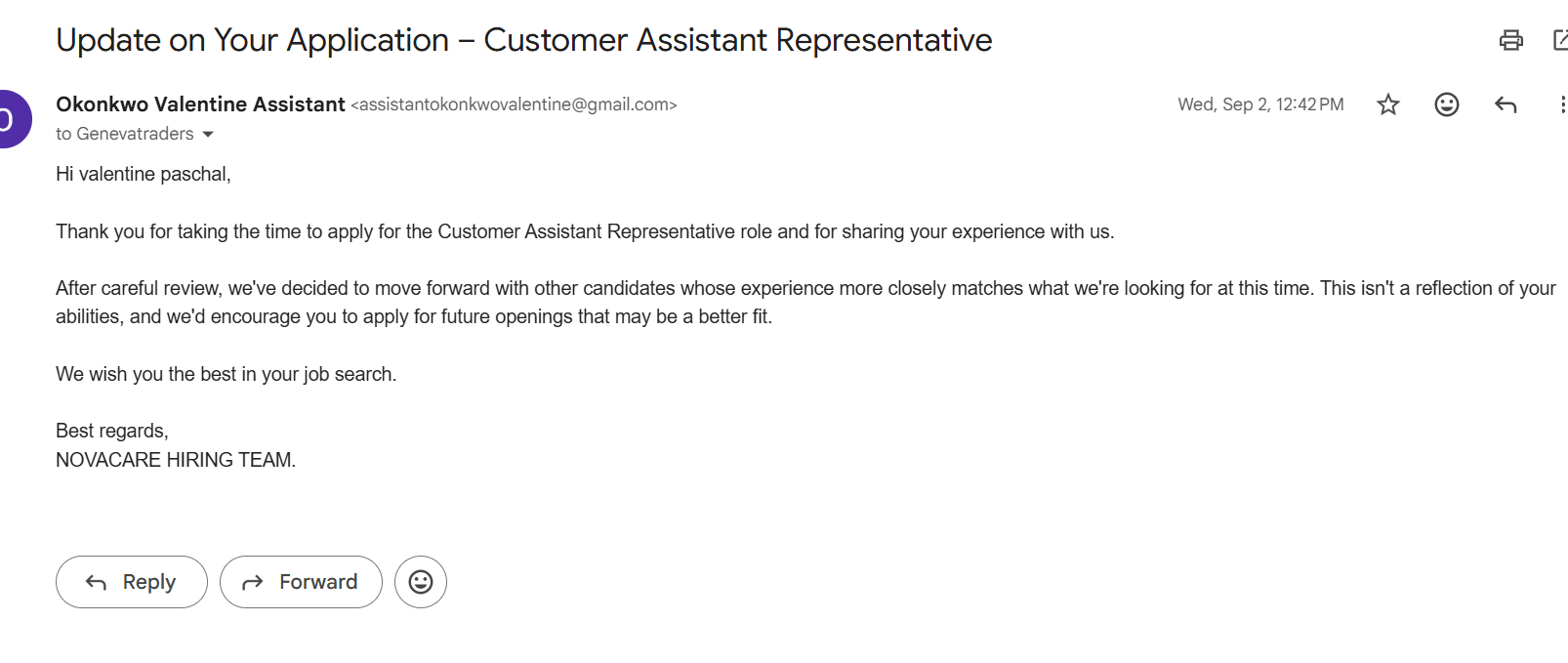
The workflow can update the recruitment record and trigger an applicant status email. The captured Gmail screenshot shows the system producing a clear “Update on Your Application” message for the customer assistant representative role.
Build by testing the edges, not just the happy path.
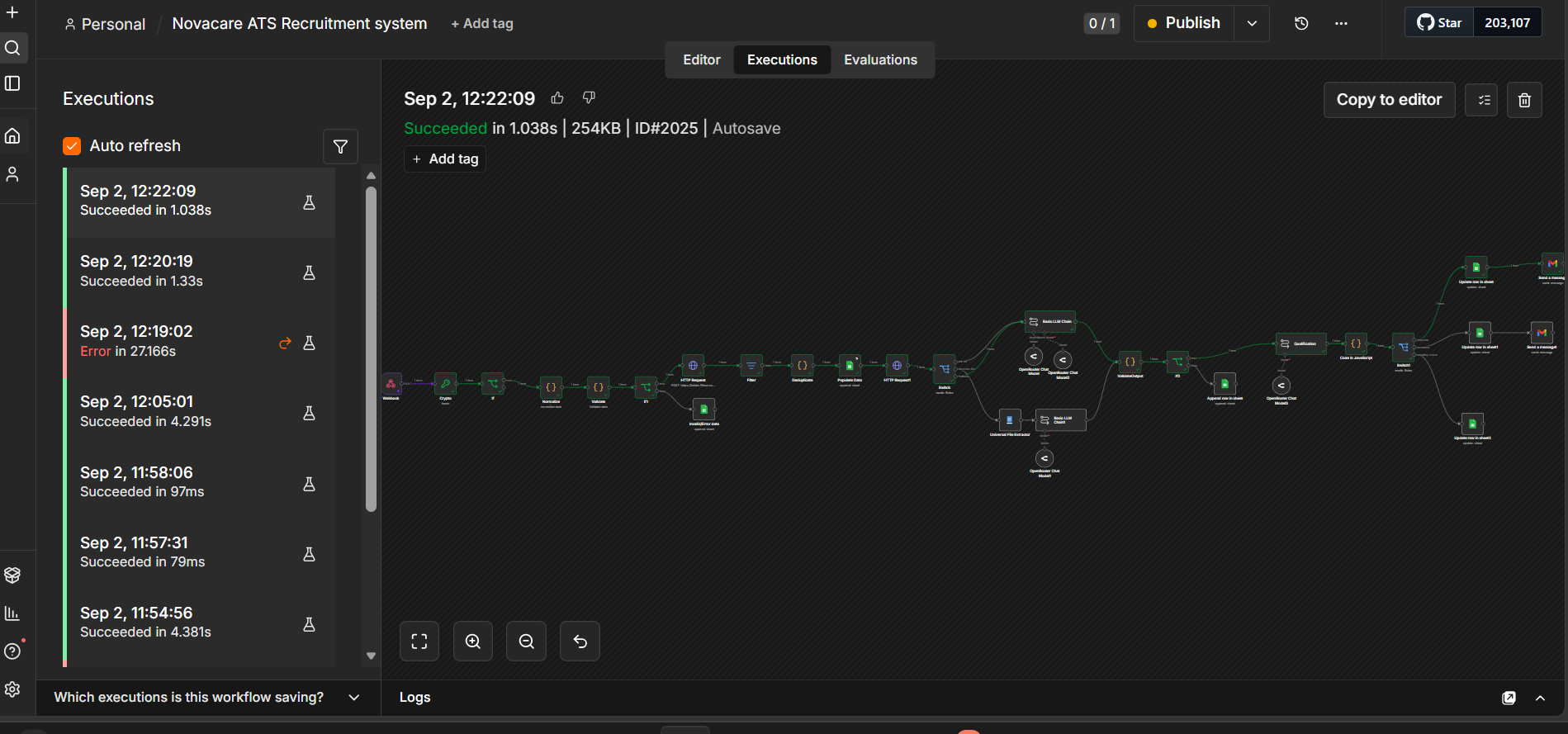
The n8n execution history shows repeated test runs, including successful executions and an error run. That became part of the development process: observe the execution, isolate the failure, adjust the workflow and retest.
The real work was making the pipeline predictable.
This project reinforced a core idea in my automation work: reliability comes from explicit gates, clean data structures, branching logic and deliberate handling of exceptions — not simply from adding more AI.
Read the full build breakdown
System responsibilities
- Intake: receive application data through a webhook and verify the expected security token.
- Normalization: convert incoming form values into a consistent internal structure.
- Validation: stop incomplete or invalid applications before downstream processing.
- Duplicate handling: determine whether the applicant already exists and branch accordingly.
- External data operations: use HTTP/API requests and structured storage steps to populate and update recruitment records.
- AI processing: extract and interpret applicant information after the workflow has established a clean data foundation.
- Qualification: use structured output and routing logic to determine the next operational path.
- Communication: update applicant records and trigger Gmail notifications.
Development problems I worked through
The build required more than connecting nodes. I had to reason through what should happen when an applicant already existed, what should happen when a lookup returned no match, how the workflow should prevent duplicate processing, and how resume data should be handled before AI extraction. Those decisions shaped the final architecture.
What the screenshots prove
The supporting evidence shows the system at three useful levels: the complete n8n architecture, actual execution history, and the resulting applicant communication. Together they show both the workflow design and the output it was built to produce.